On 29 November, the eve of Stanisław Vincenz’s birthday, the traditional ‘November Vincenz Readings’ took place in his native village of Słoboda—an annual cultural and artistic event dedicated to the legacy of the prominent writer, philosopher, and humanist.
The initiator of the Readings is the Stanisław Vincenz Library in Słoboda, currently the only library in the world to bear His name. This year, the Readings took place in an international format for the first time, with the participation of two large groups of guests from Poland: from the ‘Carpathian Society’ and the University of Wrocław.

Słoboda, in those years when the Vincenz family lived here, attracted many creative people, his friends. This place then acquired the significance of ‘a small centre of the world’—a place for meetings, reflection, conversation, and dialogue about the essentials, about meanings: who we are, what it means for us to be Human, what we are here for. In what way is our attitude towards our neighbour, our neighbours, Nature, the deceased, the future of Mankind expressed?...
Vincenz possessed a rare gift for sincere and effortless conversation about these important matters. People were drawn to the oasis of dialogue that He created around himself wherever he found himself: in Słoboda, in Bystrets at the foot of Chornohora, in Nógrádverőce in Hungary, or in the French mountain village of La Combe.
Czesław Miłosz compared his own journeys to that La Combe to a pilgrimage, ‘to a fairytale quest for wisdom’, or for spiritual healing. He surmised that he was not the only one to travel to the foothills of the French Alps with such a frame of mind. Here is a quote from his essay ‘La Combe’, published in Giedroyc's Parisian ‘Kultura’ in 1958: ‘I shall try to tell why many of us, people of different nationalities but hailing from a certain defined area of Europe, traveled to Grenoble and to the small town of Lanci in that neighborhood to climb the path up the steep slope on which the village of La Combe lies… In the end, it is possible that someone traveled there for a reason other than mine. However, since all contemporaries are poisoned with the same poisons and equally desire to be cured, one can assume that the motives were similar. A journey, or pilgrimage to someone, is not the same as a visit or a meeting. It has an established form that precedes the achievement of the goal: essentially, one must always walk long through wild mountains and deserts, higher and higher, hoping to be rewarded for the effort expended. And that reward is someone’s presence—different from that of a passerby on the street because, immersed in the background, it illuminates things and landscapes, which thereby become the goal. Such a symbolic interpretation can be given even to a train journey. There is something in it of a fairytale quest for wisdom…, or of a march with a staff through the Himalayas, or Chornohora—to the cave of a Buddhist hermit, or to the Hasidic teacher Baal Shem Tov. After Lyon, the locomotive begins to contend with the incline; the landscape approaches the carriage window at an angle. The name of the La Tour-du-Pin station signifies that Grenoble is not far off and that I shall soon see Stanisław Vincenz.’
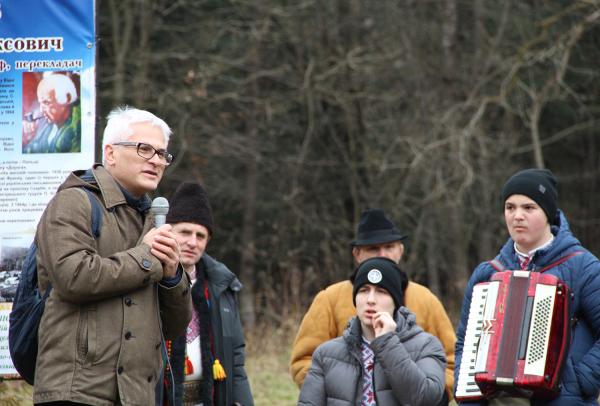
And so, in the last November days of our anxious year, Słoboda again hospitably received friends who wanted to meet in order to speak and listen in the language of dialogue—the language of Vincenz. A dialogue in the spirit of mutual respect, understanding, and human solidarity is especially necessary for us now: both amongst ourselves and with our European neighbours. For we can survive the war with a strong, cruel, and cynical aggressor only together: a united Ukraine and Europe.
On the other hand—the world is currently undergoing rapid and complex transformations. It will not return to its past state. A new vision of the world is needed. It is important that in the course of these transformations, the human in people is not lost: their capacity to talk, to find points of understanding, to empathise, to cooperate. It is no secret that substantial literature, high art, and philosophy can not only reflect the world but also create new worlds and new meanings. They can pave paths of dialogue between different nations and cultures...
The program of the November Vincenz Readings 2025 included: a living conversation about the life, creative path, and intellectual circle of the ‘Homer of the Hutsul region’; performances by folk music ensembles; and, of course—the indispensable ritual of reading aloud Vincenz’s works in Ukrainian and Polish.
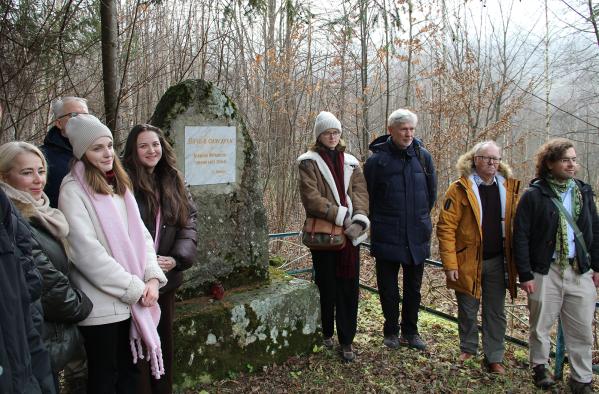
This event took place at the memorial stone standing on the site of the parental home where He entered the World in 1888, near the monument to Ivan Franko established by Him not far from his own house in Słoboda, and in the auditorium of the local Slörung Hotel.
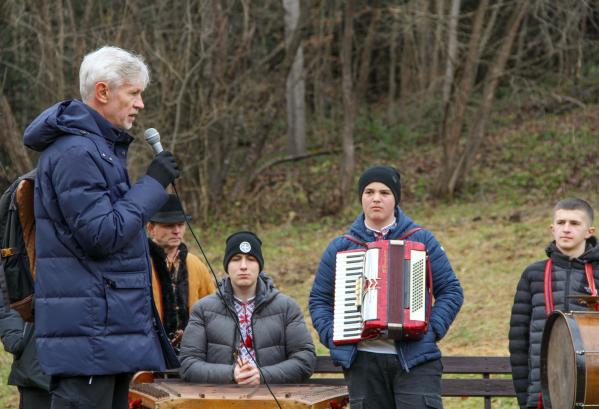
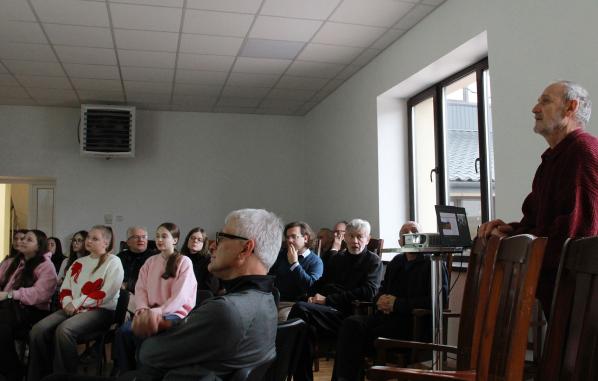
As in previous years, the Readings were organised by: the Stanisław Vincenz Library in Słoboda, the Vasyl Stefanyk Carpathian National University, the NGO ‘DIIE: Good Ideas Unite’, the Slörung Hotel, EGO ‘Green World’, and the hospitable community of Słoboda village. Media partner—TRK TNK (Kolomyia).
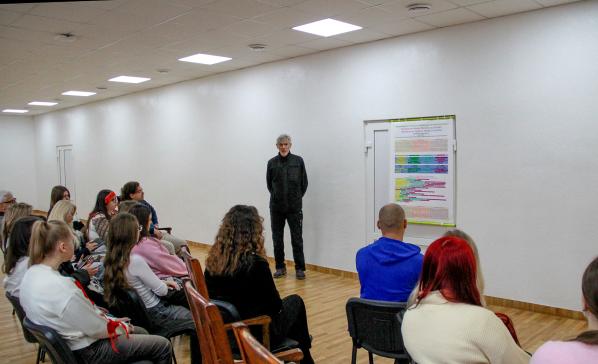
Participants of the Readings included: Professor Jan Choroszy—head of the Workshop for Research on the Legacy of Stanisław Vincenz at the University of Wrocław; Dr Leszek Rymarowicz—vice-president of the ‘Carpathian Society’; and other honoured guests.
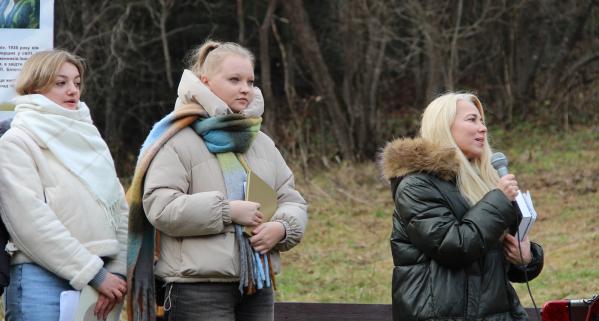
As last year, in addition to the residents of Słoboda, a large group of students from the Carpathian National University joined the Readings.
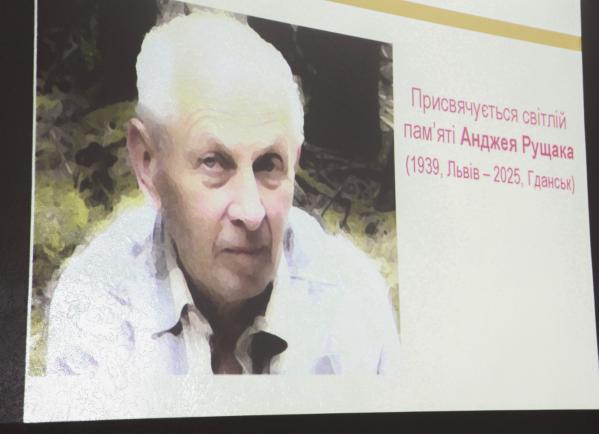
From ‘Green World’, a presentation was shown to the audience dedicated to the cherished memory of Andrzej Ruszczak, a local history researcher of the ‘Carpathian Society’ who passed into eternity this year.
The Readings, naturally, were not without friendly gifts. Polish colleagues presented the latest publications in the field of ‘Vincenziana’, which is constantly enriched with their own research and publications by Professors Jan Choroszy in Wrocław and Mirosława Ołdakowska-Kufel in Lublin. Our sincere thanks; we shall be reading them.
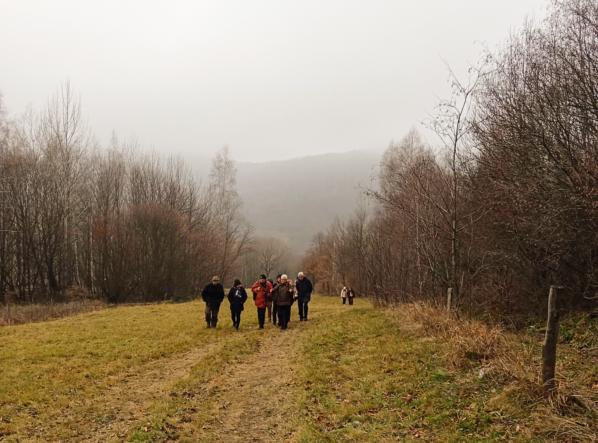
As the day drew to a close, the participants of the Readings also visited the remains of the historic cemetery in the Ropa hamlet of Słoboda. It is likely here that Felix Vincenz, the writer's father, as well as his Hutsul nanny Palahna Rybenchuk-Slypenchuk, found their final resting place. The sites of their burials are now concealed by a century-old periwinkle carpet, but we hope that through joint efforts, they can be located during the next journey and meeting.
* * *
The ‘Vincenz Readings in Słoboda’ were once again held this year as a manifestation of civic initiative and volunteering in the field of culture—their organization was not funded by state authorities, charitable foundations, or political parties.
